The Cook — my own pan这一锅 · 实拍
一步一步炒出来
The actual dish I made — the method above, in the pan. Each shot is one step of the flow.这就是我做的那一锅——上面的流程,落到锅里。每张对应一步。
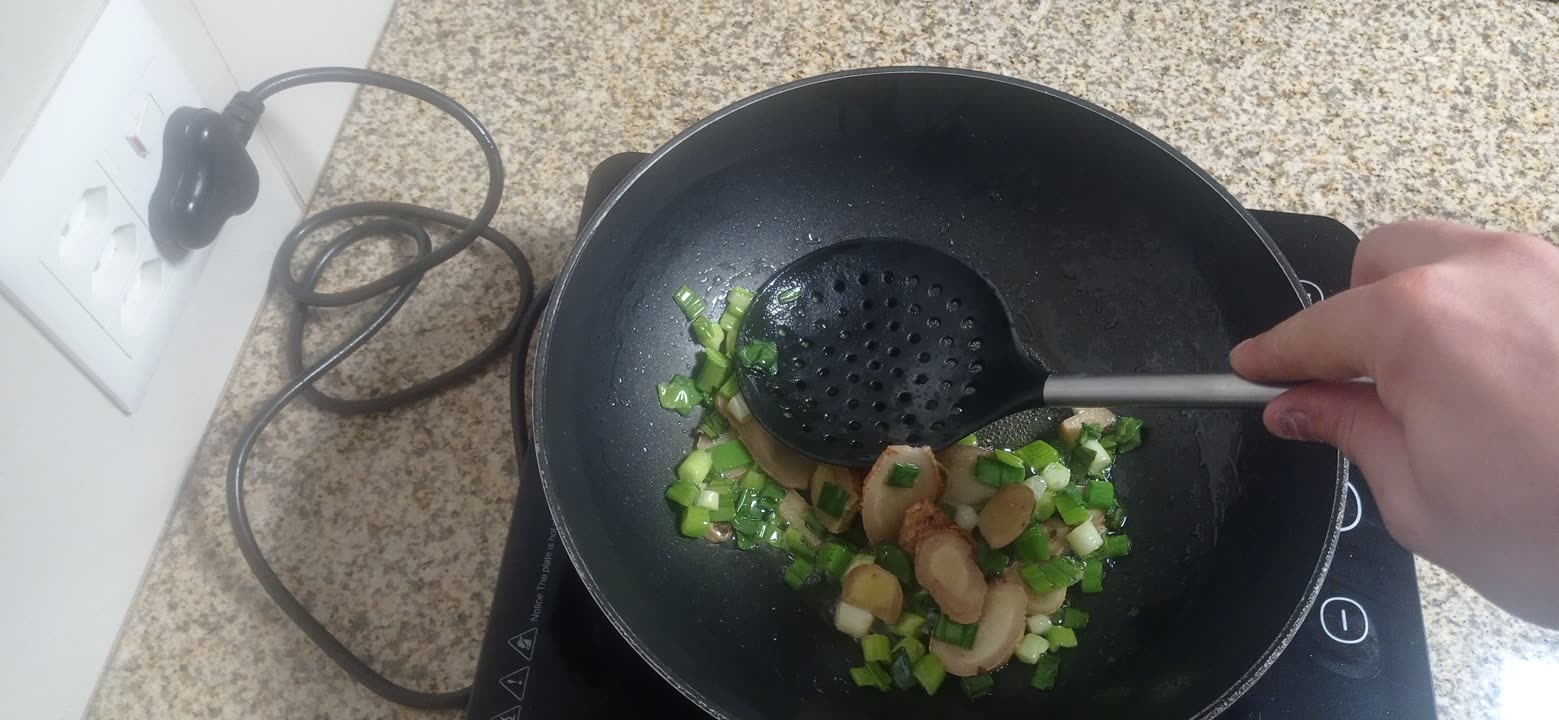
Step 1 · aromatics第一步 · 爆香
姜片、葱花下热油
jiāng piàn, cōng huā xià rè yóu
Ginger coins and chopped scallion go into the hot oil first.姜和葱先下热油爆香。
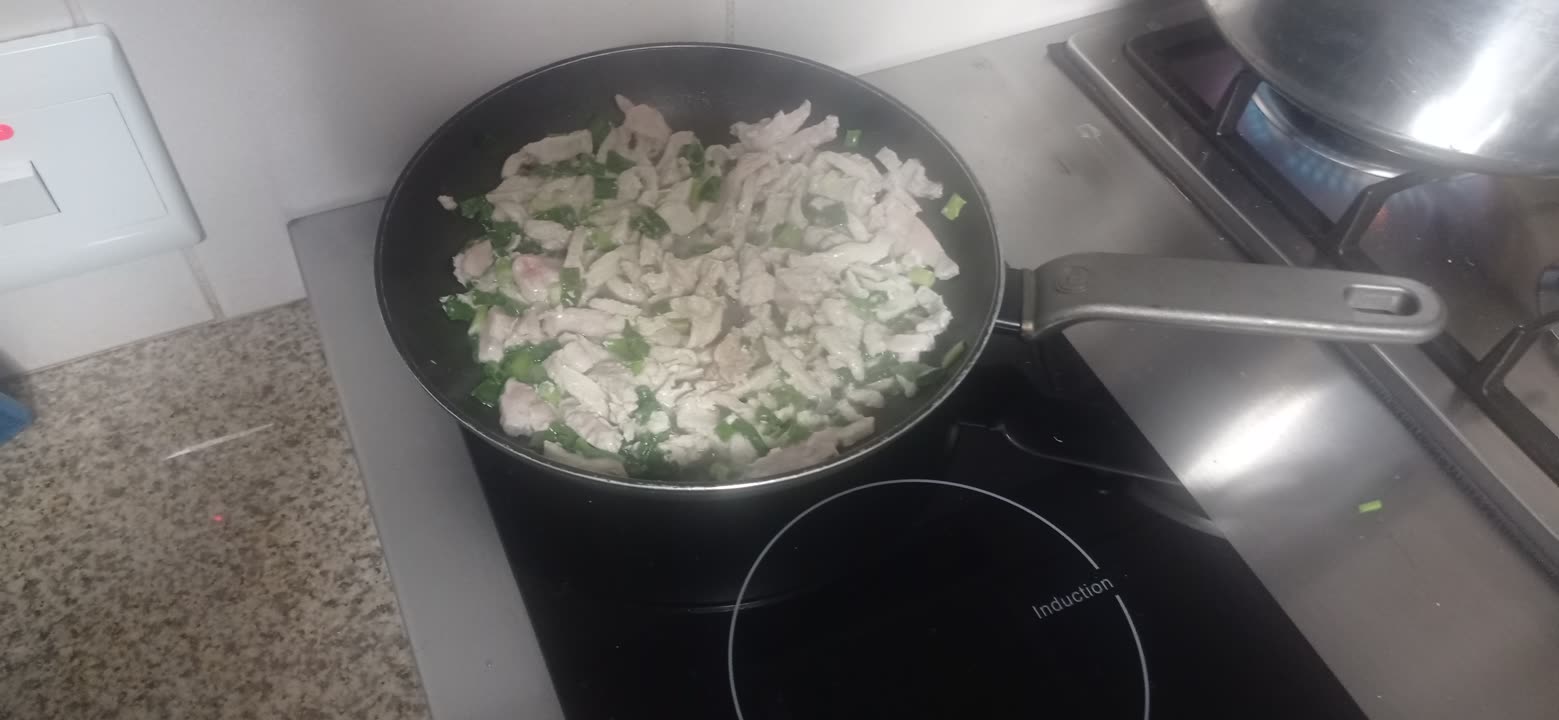
Step 2 · chicken第二步 · 下鸡
鸡肉切条,炒到变白
jīròu qiē tiáo, chǎo dào biàn bái
Chicken sliced into strips, stir-fried until it turns white.鸡肉切成条,炒到变白。
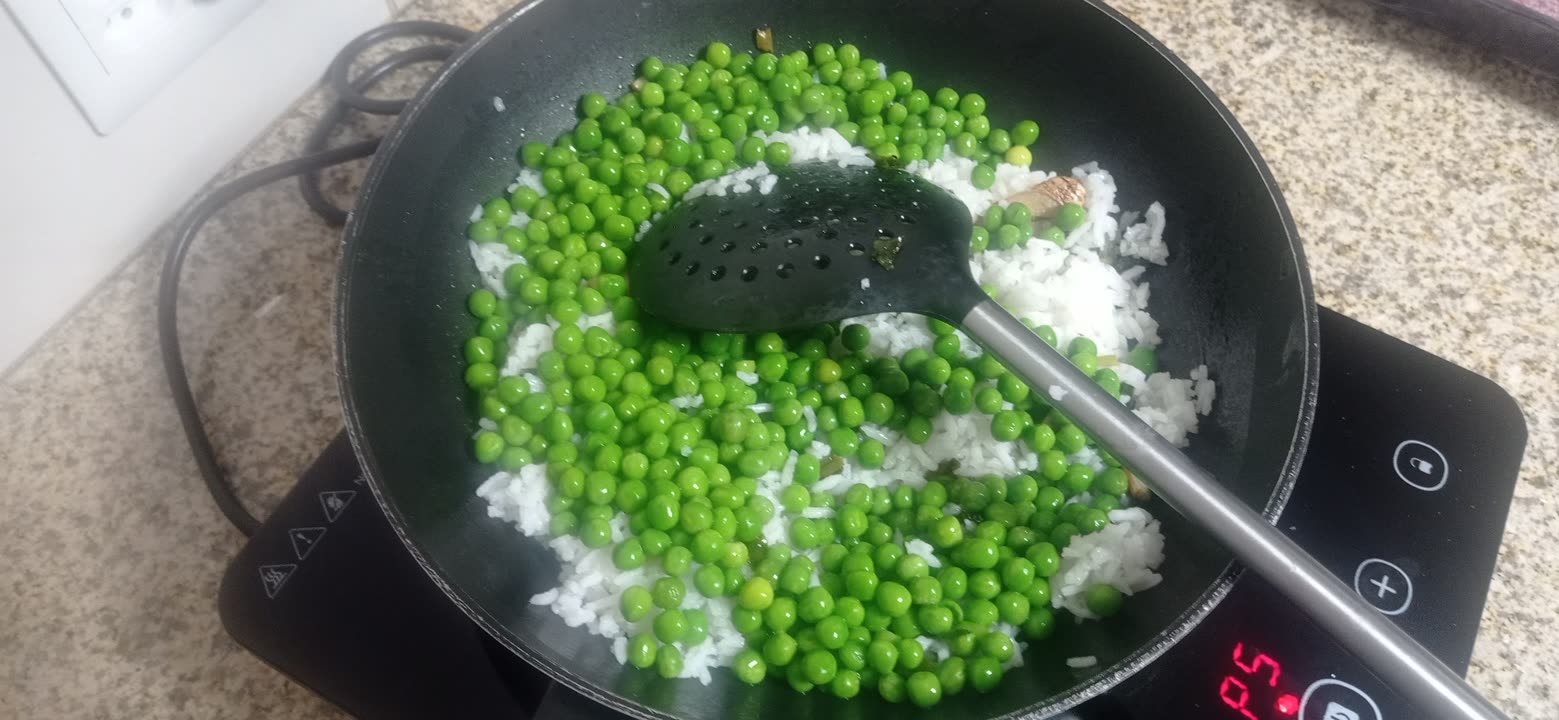
Step 3 · rice & peas第三步 · 下饭下豆
隔夜饭和豌豆一起下锅
géyèfàn hé wāndòu yìqǐ xià guō
Day-old rice and peas go in together and are stirred loose.隔夜饭和豌豆一起下锅炒散。
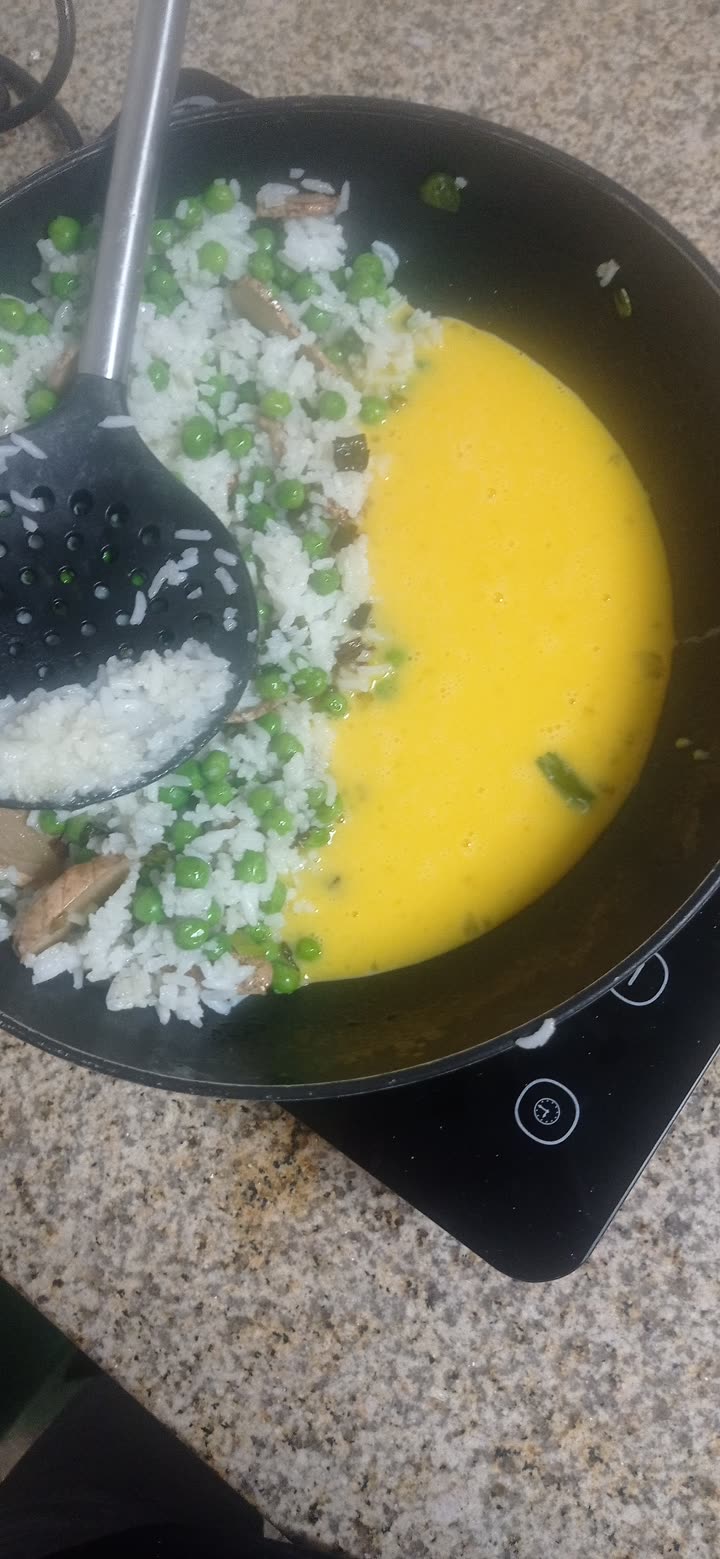
Step 4 · the egg第四步 · 倒蛋
把饭拨到一边,倒入蛋液
bǎ fàn bō dào yìbiān, dào rù dànyè
Push the rice aside, pour the beaten egg into the cleared crescent.把饭拨到一边,蛋液倒进空出的半边。
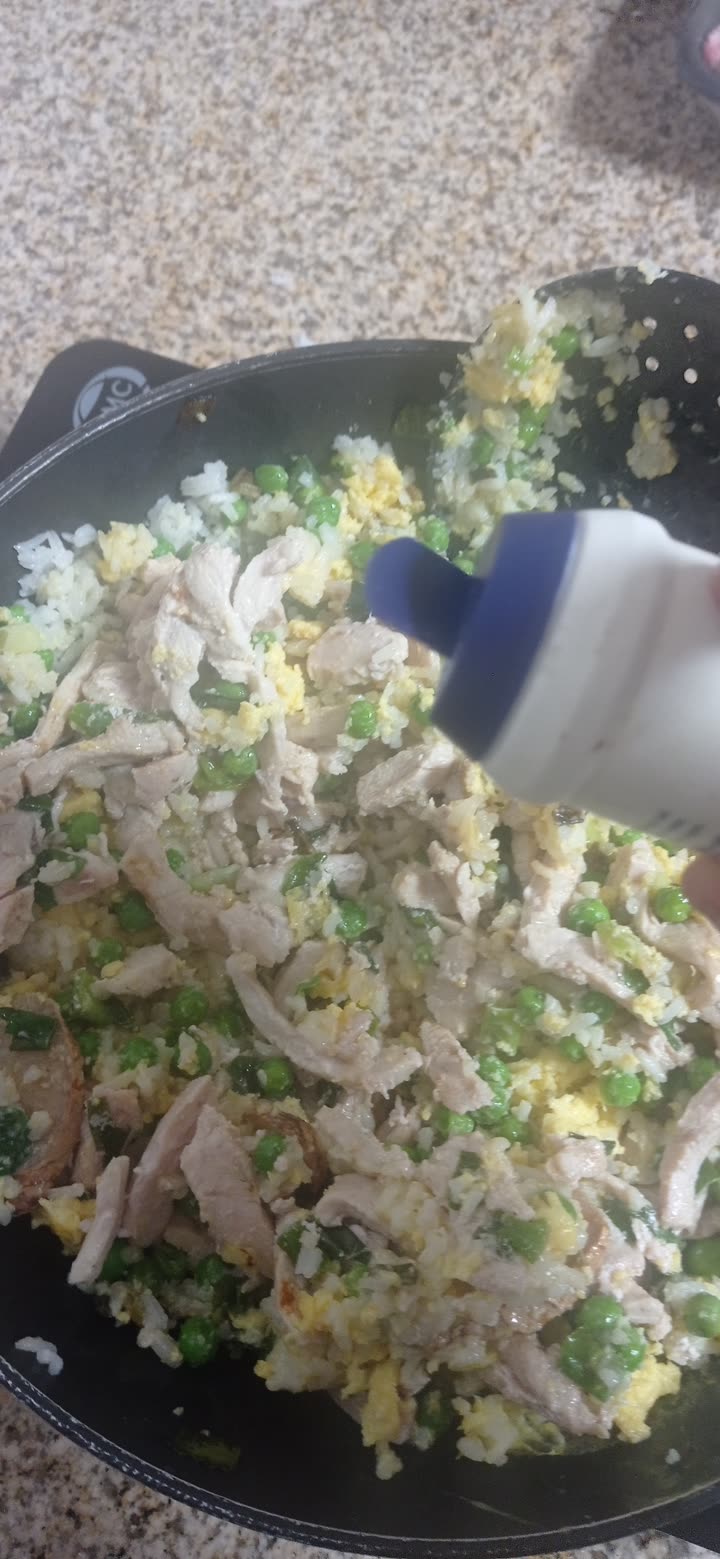
Step 5 · sesame oil第五步 · 淋麻油
拌匀,起锅前淋麻油
bàn yún, qǐ guō qián lín máyóu
Mix it all through, then drizzle sesame oil just before serving.全部拌匀,起锅前淋上麻油。
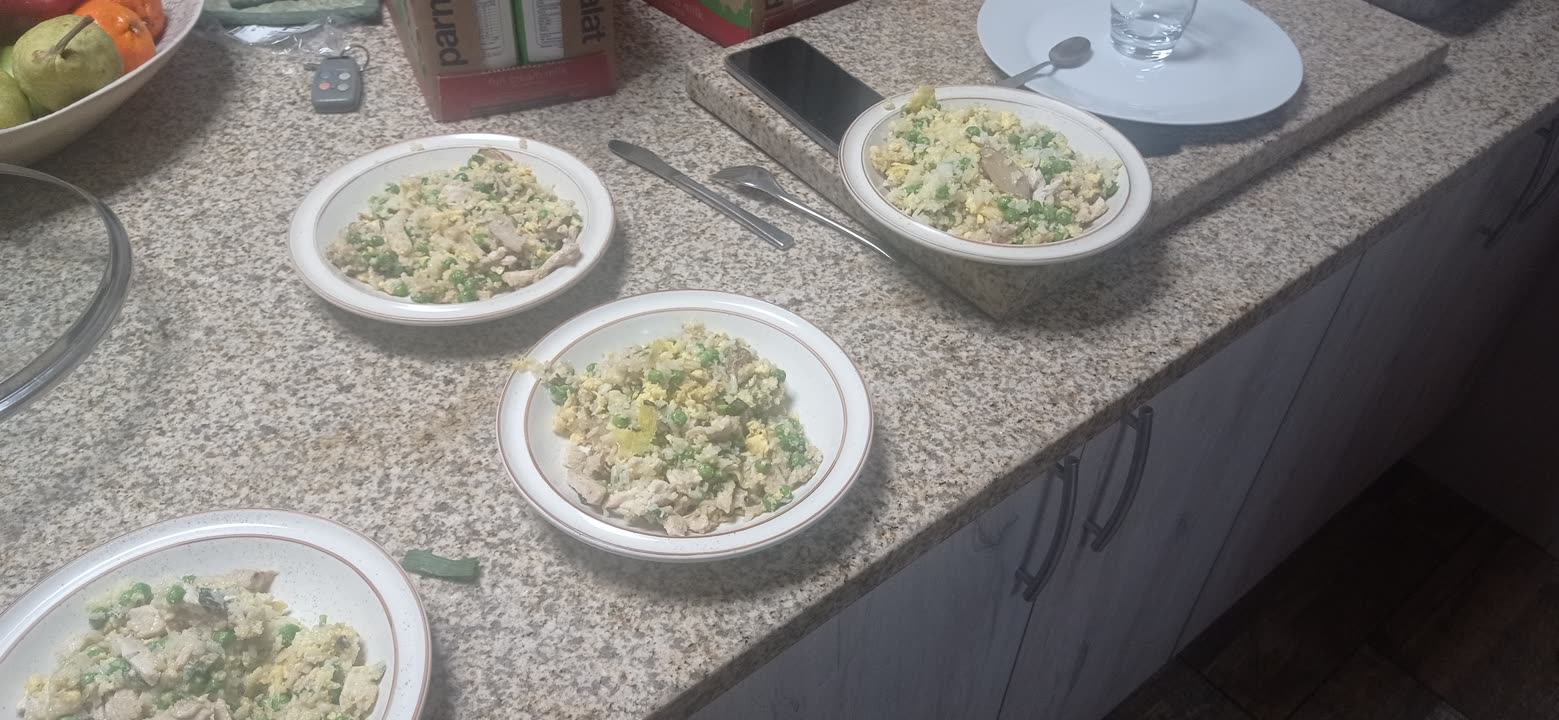
Step 6 · plated第六步 · 出锅
趁热出锅,盛成四碗
chèn rè chū guō, chéng chéng sì wǎn
Plated hot, straight from the wok — four bowls' worth.趁热出锅,盛了四碗。